





Final State Budget Includes Critical Investments for Addressing Housing Affordability and Homelessness
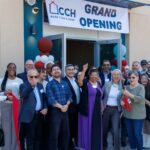
Grand Opening – Hayward Senior Commons
June 26, 2026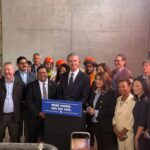
SF Gate: Newsom Signs New Affordable Housing Bill in Oakland
July 14, 2026
Over the last five months, NPH and our members have joined with partners across the state to push for a state budget that answers the urgent call coming from communities across the state to make sure more Californians have safe, dignified places to call home.
Thanks to the tireless efforts of thousands of housing advocates, including you, alongside our champions in the legislature, our movement has secured significant investments in affordable housing and homelessness prevention in the 2026-27 California state budget.
This year’s budget, in combination with the statewide housing bond voters have the chance to approve in November and the new California Housing and Homelessness Agency coming online, represents the potential for a historic, transformational moment for affordable housing in California.
Here’s how we got here, and what happens next.
Doubling Down on Our Progress
We are seeing the benefits of years of dedication and hard work. Over the last five years, we’ve more than doubled the rate of affordable housing production. Streamlining reform has allowed us to build affordable homes more quickly and more efficiently. Programs like the Homeless Housing, Assistance and Prevention (HHAP) Program have served over 300,000 Californians and enabled 80,000 people to exit homelessness since 2023.
We are turning the corner, and increased investment right now can help our field accelerate progress and deliver on the promise of the new California Housing and Homelessness Agency (CHHA).
What’s in the 2026-27 State Budget for Housing?
This year’s budget includes a 52% increase in investments for housing and homelessness programs over last year — a significant increase that brings us closer to the full investments called for by the coalition.
Housing and homelessness prevention programs are receiving a total of $1.7B. The final amounts for all programs, in order from largest to smallest, are:
- $900M to the Homeless Housing, Assistance and Prevention (HHAP) Program — a huge win for the coalition to nearly double this program’s budget from the previous year and bring it closer to historic funding levels
- $500M State Low-Income Housing Tax Credit (LIHTC) — matching last year’s funding level, which is critical to leverage federal LIHTC opportunities
- $200M to Multifamily Housing Program (MHP) — an important increase over last year’s budget for this oversubscribed program, which would have otherwise been depleted this year
- $100M to Disaster Rebuilding Fund — to support homeowners to rebuild after natural disasters
These investments are critical for holding and continuing our progress in addressing housing affordability and homelessness, especially as our organizations and communities grapple with federal cuts and threats.
Trailer Bill AB 179 to Help Implement the New California Housing and Homelessness Agency (CHHA)
As part of the budget process, bills known as “trailer bills,” because they “trail” the budget, are also passed to address implementation details. This year, AB 179, which addresses implementation details of the new California Housing and Homelessness Agency (CHHA), has been passed and presented to the governor for signature. It is not yet law, but we fully anticipate it to be signed soon. AB 179 allocates private activity bonds to the new CHHA, establishes a split for the Affordable Housing and Sustainable Communities (AHSC) funding, and establishes the makeup of the Housing Development Finance Committee (HFDC).
Private Activity Bonds
AB 179 will dedicate 90% of the state’s Private Activity Bonds to housing until 2039, after which it will fall to 80%. Additionally, 50% of those bonds dedicated to housing will be sent to HDFC, and 50% will remain with the Treasurer. This falls to 40% after 2029, unless the annual demand survey demonstrates the need for continuing at 50%. NPH advocated for these changes to support non-profit and mission-driven developers applying for HCD funding.
Affordable Housing and Sustainable Communities (AHSC)
While AB 179 does not outline the amounts of funding, it does establish that some amount of the AHSC funds will be sent to HDFC to support infill housing and some will stay at the Sustainable Growth Council (SGC) to support transit. In the wake of changes passed by the California Air Resources Board (CARB), the available amount of AHSC funding remains a large, unanswered question.
HDFC Structure
The last major change that AB 179 makes is the establishment of the HDFC structure. Of the eight-member Committees, five will be voting members and three will be nonvoting members. The five voting members will be the Secretary of the California Housing and Homelessness Agency, the directors of CalHFA and HCD, and the State Treasurer and Controller. Currently, they are Sec. Tomiquia Moss, Tony Sertich, Gustavo Velasquez, Fiona Ma, and Malia Cohen, respectively. The three nonvoting members will be one appointee each from the State Senate, the State Assembly, and the Department of Finance.
What’s in The Veterans and Affordable Housing Bond on the Ballot this November?
The 2026-27 budget for housing took shape alongside the historic $11.25B statewide housing bond, which was placed on the ballot by Governor Newsom and legislators on Thursday, June 25.
This November, California voters will have the opportunity to invest billions into building and preserving affordable housing, fighting and ending homelessness, and expanding homeownership for the next generation. The final amounts for all programs in the bond, in order from largest to smallest, are:
- $5.1B to the Multifamily Housing Program (MHP), with a 10% ELI set-aside
- $1.25B to Veterans Homeownership
- $1.15B to Supportive Housing (through MHP), where 15% may be used for Homekey+
- $1.1B to Homeownership, with $600M to CalHOME
- $750M to the Portfolio Reinvestment Program (PRP)
- $500M to the Infill Infrastructure Grant Program (IIG)
- $450M to the Serna Farmworker Housing Program (Serna)
- $350M to Student Housing, split between UC and CSU systems
- $200M to the Community Anti-Displacement and Preservation Program (CAPP)
- $200M to Tribal Housing
- $200M to Local Housing Trust Fund matching
This level of support would be transformative; if passed in November, this bond would invest twice the amount of resources in affordable housing compared with 2018’s Prop 1 and 2. Now, with a new Housing and Homelessness Agency and a series of critical streamlining bills in place, this 2026 bond will be well positioned to deliver life-changing results for California families.
Thank You to Our Housing Champions
We are thankful to be part of a coalition of more than 50 diverse organizations — representing wide-ranging expertise across affordable housing, homelessness, legal, education, economic justice and other related policy issue areas — who advocated with unified strength to win the resources our communities need.
We are grateful to Assemblymember Matt Haney and Senator Jesse Arreguín, the chairs of the housing committees in the Assembly and Senate, for upholding our coalition’s priorities and building support from their colleagues to fund key housing and homelessness programs.
Thank you to Assemblymember Jesse Gabriel and Senator John Laird, the chairs of the budget committees, for their steadfast support and to Assembly Speaker Robert Rivas and Senate President pro Tempore Monique Limón for their leadership in championing these historic investments. We are also thankful for the support of Governor Gavin Newsom and his administration in negotiating a final budget that doubles down on housing progress.
What’s Still Undecided?
Our team is tracking some lingering issues that were undecided in this budget. The most notable is the ongoing negotiation between the Senate and the Governor’s administration to retain funding for Affordable Housing and Sustainable Communities (AHSC) in the Greenhouse Gas Reduction Fund (GGRF) after recent changes by the California Air Resources Board (CARB). We will continue to advocate for AHSC funding over the next few months, and we will share opportunities to lift your voice on this important issue.
Looking Ahead to November
The vast majority of Bay Area residents want to see increased investment in affordable housing. Our task this year is to make those investments real, so we can transform the lives of families in our communities, prevent displacement, improve people’s health and children’s education, create new jobs, and foster stronger, safer, more resilient neighborhoods. This November election will bring an incredible opportunity to pass the historic housing bond, bringing much-needed resources to our communities. Unfortunately, the same ballot will also include the threat of the negotiated measure that would increase the voter threshold for real estate transfer taxes, a tool used by several communities in our state to fund affordable housing.
Stay in the Loop!
We encourage NPH members to join the Legislative Working Group to stay updated and connected throughout the summer and fall on all the ways we’re acting for transformative change!